We'll sort your Self Assessment from just £119. Learn more
The Great ProTAXination: One in five would rather pay a £100 fine than file their taxes
New research from Taxfix reveals the emotional and financial toll of tax procrastination ahead of the January 31st deadline.
LONDON, UK, 19 JANUARY 2025 – Britain has a tax procrastination problem.
As the 31st January tax deadline looms, new research from Taxfix, Europe’s leading AI tax accounting platform, reveals that one in five (19%) self-employed Brits would rather pay a £100 fine than deal with the stress of filing their tax return on time. With a significant proportion of self-assessors still yet to submit, and 25% admitting they will leave filing their return even later than usual this year, the data shows that stress, confusion and a lack of clear guidance are fuelling widespread procrastination.
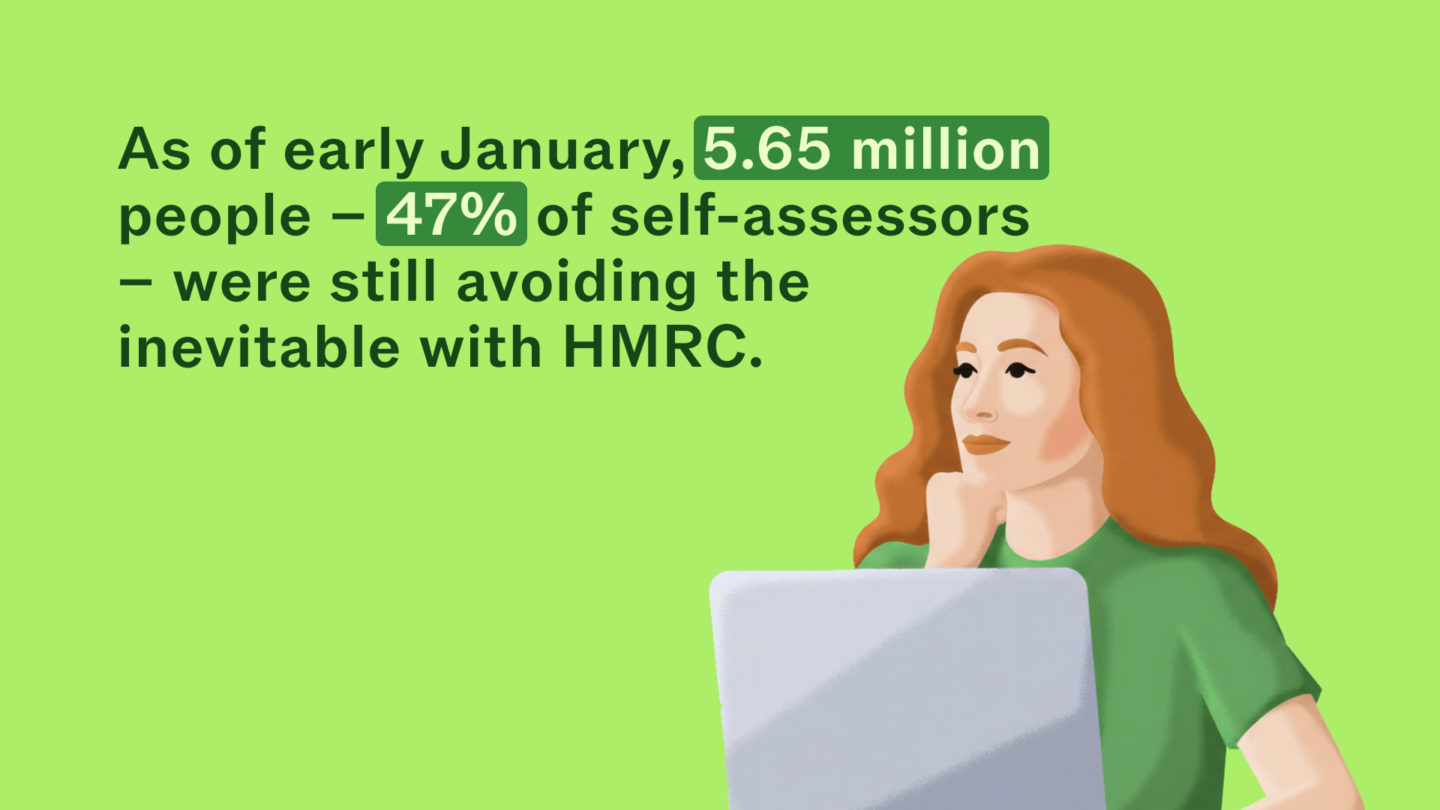
As of 2nd January, HMRC identified that 5.65 million people – 47% of those who must complete a Self-Assessment – still hadn’t filed their return. But data from Taxfix shows that rather than laziness or negligence, there is a direct correlation between tax return procrastination and the complexity of the process.
Of those who have not yet filed, complex forms (29%), constantly changing tax rules (20%), and the anxiety the process causes (27%) were cited as some of the biggest barriers to getting started.
More than half (54%) of self-assessors said the poor customer service and confusing HMRC website puts them off starting their tax return.
Taxes take their toll
Tax stress is impacting Britain’s self-employed workforce, with a third (32%) saying filing their return is the worst thing about being self-employed and one in six (16%) saying the tax return process makes them question working for themselves at all.
Connor Gani, freelance producer based in London, said: “Doing a tax return as a sole trader feels way more complicated than it needs to be. Every year, I’m forced to navigate the same system a Limited Company uses – scrolling through endless pages that don’t apply to me with anxiety-inducing warnings about penalties if I get it wrong.
“As a freelancer, you’re constantly worried you’ve underpaid – but you rarely know if you’ve overpaid either. With little clear guidance on what you can expense and a clunky, manual process, it’s basically impossible to feel confident you’ve got it right.
“For sole traders, November to February is often a quieter time when it comes to finding work. So having to dedicate hours to tax filing instead of finding jobs feels pretty brutal. The reality is that this is the main reason I’m considering going back into full-time employment”.
For some, the impending tax return deadline impacted the festive season. Some 39% felt anxious over the Christmas period or don’t feel well-rested from having to do their tax returns over the break.
1 in 10 (10%) said doing their tax return has impacted their New Year’s resolutions such as drinking less and eating less chocolate because they needed a stress reliever. 5% of self-assessors – around 600,000 – even said that stress about their taxes ruined their Christmas this year.
Why Brits delay
The research reveals the top reasons that Brits won’t submit on time this year, with the stress the process causes topping the list.
Other reasons cited included getting the right work-life balance (27%), needing to focus on generating revenue instead (21%), not wanting to deal with HMRC on the phone (17%), and not having the spare cash to pay for an accountant to help (19%).
26% said that they’d rather clean the fridge than tackle their tax returns.
Last year, more than £110 million in £100 late-filing penalties was issued by HMRC after over one million people missed the Self-Assessment deadline.
Under current rules, anyone who files late receives an immediate £100 penalty. If a return remains outstanding for more than three months, additional penalties of £10 per day can apply, up to a maximum of £900, with further penalties possible at six and twelve months.
Martin Ott, CEO of Taxfix said: “With the longest tax code in the world and a constantly changing set of rules, including the long-awaited introduction of Making Tax Digital, self-assessment is not getting any easier for Brits. Tax filing should be as simple as ordering a pizza. No one should have to pay unnecessary fines because of an overly complex and outdated process. At Taxfix, we make tax filing simple and easy to follow on web and mobile, while also connecting people with expert accountants so they can submit with confidence.”
Looking ahead, the majority of self-assessors said that their relationship with taxes would be much better if the process were simplified (81%). 35% would like to see reduced complexity in tax laws, 32% want to see clearer rules on deductions and credits to minimise errors, and 27% would value mobile-friendly filing so they can do it on the go.
If you’re yet to submit your taxes ahead of the 31st January deadline and need help, you can find more advice and support here.
ENDS
———————————-
About Taxfix
Taxfix is Europe’s leading AI tax accounting platform, with over 8 million tax returns submitted and more than €4,5 billion in refunds reclaimed. We are transforming one of life’s most complex and stressful tasks – filing taxes – into a simple, secure, and personalised experience. With this, we empower people to take control of their finances and fix finance for all.
With scalable technology, seamlessly integrated AI, and user-centric design, the platform offers a broad range of tailored tax filing solutions for its customers, from intuitive self-filing offers with guided Q&A flows, to expert tax advice as well as special financial services for the self-employed. For Taxfix’s independent tax accountant partners, the company has built a powerful partner platform that provides intelligent tools, automation, and AI-driven workflows to enable efficient and high-quality service delivery at scale.
Taxfix employs over 400 professionals from more than 50 countries and is operating in three of the largest European financial markets: Germany, the UK and Spain. The company is backed by world-class investors such as Index Ventures, Valar Ventures, Creandum, Redalpine, and Teachers’ Venture Growth (OTPP).
Methodology
The research was conducted by Censuswide, among a sample of 2,000 people in the UK who have to file a self-assessment tax return. The data was collected between 02.01.25 – 07.01.25. Censuswide abides by and employs members of the Market Research Society and follows the MRS code of conduct and ESOMAR principles. Censuswide is also a member of the British Polling Council.
Looking for tax help?
Or see our Guides, Calculators or Taxopedia