Finlay Sheikh
Published on: 10.11.2026
Published at: 19.11.2026
Reading time: 3 minutes
Can you use Excel for Making Tax Digital?
Are you self-employed or a landlord ? Do you run a business that uses digital spreadsheets to keep track of your tax records? Yes?
Then you might be wondering if you can use Excel for making tax digital (MTD)?
Let’s find out!
Finlay Sheikh
Published on: 10.11.2026
Published at: 19.11.2026
Reading time: 3 minutes
Making Tax Digital Recap
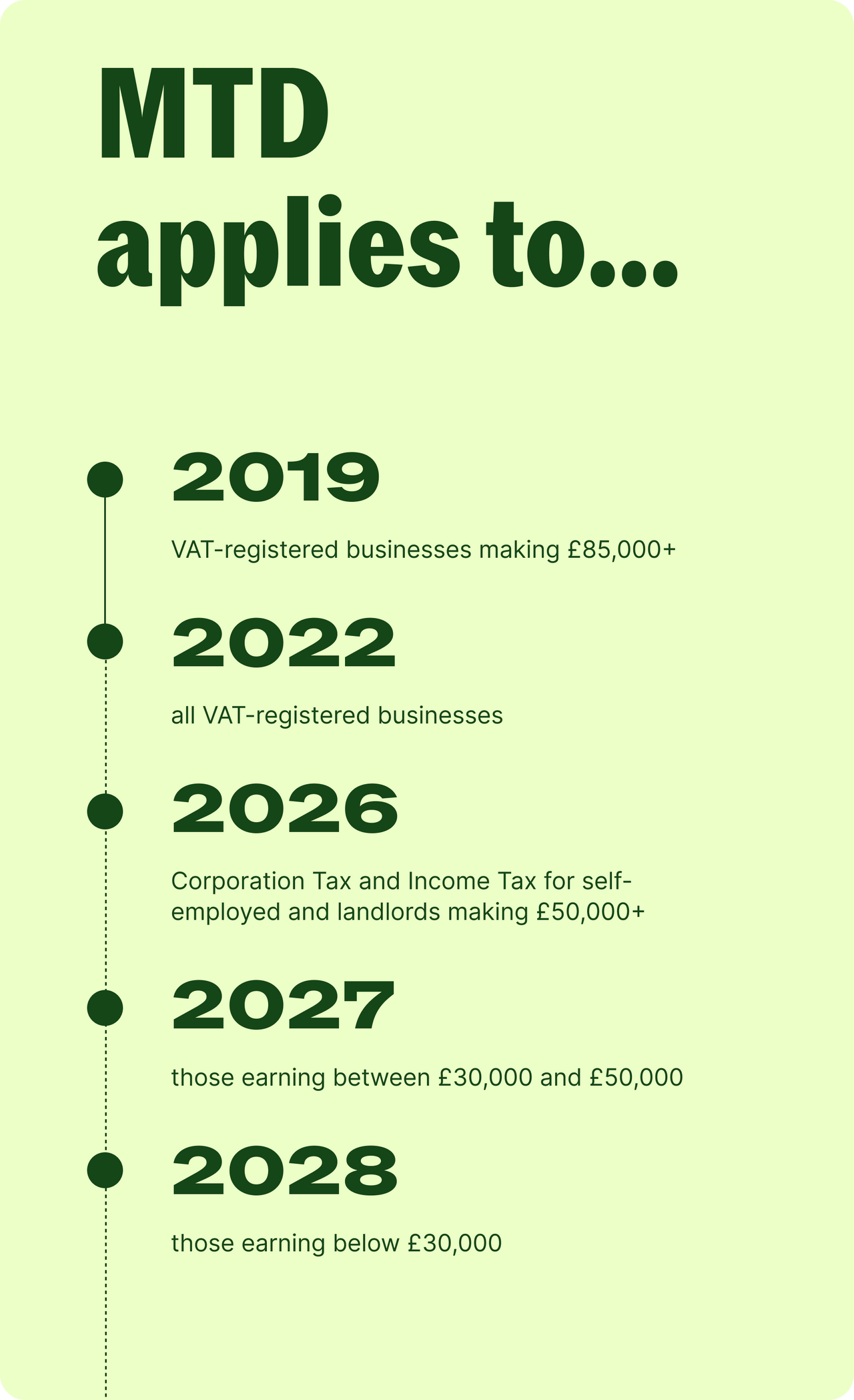
MTD is being rolled out by HMRC to help businesses, the self-employed and landlords get their tax right and to move all their records online. The first part of MTD came into full effect in April 2022 for all VAT-registered businesses. It’ll soon apply to Income Tax (2026) and Corporation Tax (approx 2026) too.
If you run a small business or work for yourself, you might already be used to using HMRC’s online service to complete Self Assessment or to pay VAT . Like many companies and sole traders, you also might use spreadsheets to keep track of your tax and earnings.
As part of the government’s plan to switch to a fully digital tax service, VAT-registered businesses and individuals who pay Income Tax will have to submit these records to HMRC using a certain type of software. This means that the method that many people currently use to submit VAT returns and/or Self Assessment tax returns will no longer be valid!
Our Making Tax Digital (MTD) software for landlords and sole-traders with built-in accountant support is now live. First month for free!
Accountant-led onboarding & support
Simple-to-use software
Affordable pricing options – from £24.99/month
Why do I need to use MTD-compatible software?
It’s the law – and you can’t just keep sending paper records to complete your taxes when MTD comes into effect. This is because you have to make sure that the accounting software you use is able to connect directly to HMRC.
So, unless you’re ‘ exempt ,’ the new rules apply to all VAT-registered businesses. And they’ll also apply to sole traders and landlords when MTD for Income Tax comes into effect in 2026 for sole-traders and landlords earning more than £50,000 and 2027 for those earning between £30,000 and £50,000.
If you do not comply with these changes, you will face strict penalties .
Can you use Excel for making tax digital?
Whether or not you can use Excel for making tax digital depends on whether MTD applies to you for VAT or Income Tax.
📈 Income Tax
If you’re self-employed or a landlord and want to use Excel for MTD, then it’s not compatible. This is because Excel does not have the ability to submit updates and submissions to HMRC directly, as required. Instead, you have to use one of the HMRC recognised types of accounting software. You can view the full approved list on HMRC’s website here.
If you still really want to keep using Excel to keep track of your income and expenses, then you can, but just be aware that you’ll need to still use MTD-compatible software to actually submit this information to HMRC.
💼 VAT
If you run a VAT-registered business, then the good news is yes! You can keep using Excel, but you’ll need to find a type of ‘bridging software’ that can connect it to HMRC systems using ‘digital links.’
The value added tax (VAT) rates in the 2025/26 tax year 👇
Tax rate | What the rate applies to | |
Standard rate | 20% | Most goods and services |
Reduced rate | 5% | Goods and services like children’s car seats and home energy |
Zero rate | 0% | Goods and services like most food, books and children’s clothes |
*Businesses earning more than £90,000 in a tax year must register for VAT. See here for more
These ‘digital links’ allow data to move between one programme and another – giving businesses who don’t want to use full MTD software an interim solution for complying with the new changes.
MTD for ITSA made easy.
We’ll help with a fully compliant service designed to keep your digital filing on track.
Learn moreNeed Making Tax Digital help?
If you’re confused by the upcoming MTD changes, and the type of software you need to use, then don’t worry. Get in touch with us for some simple, one-off tax advice from one of our accredited accountants. You can learn more here .