Finlay Sheikh
Published on: 10.11.2026
Published at: 17.11.2026
Reading time: 2 minutes
Income Tax rates in the UK
Finlay Sheikh
Published on: 10.11.2026
Published at: 17.11.2026
Reading time: 2 minutes
UK income tax rates depend on your income.
Currently, the UK basic income tax rate is 20%.
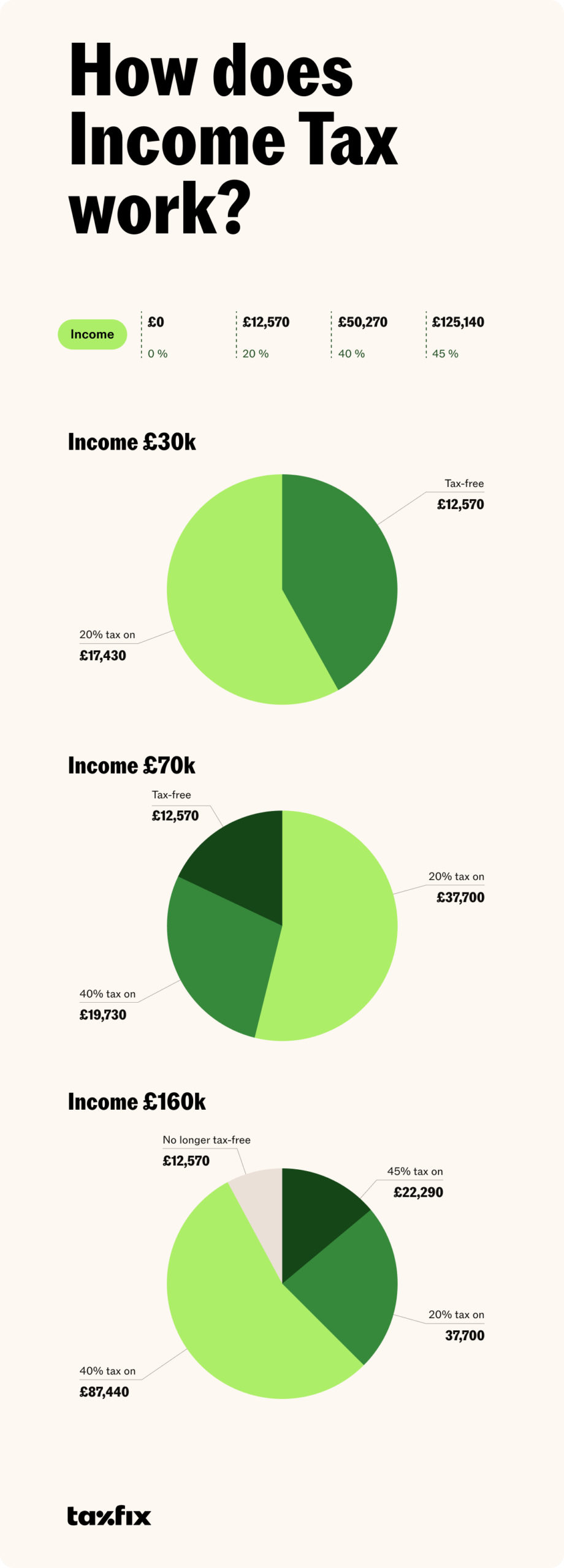
Depending on your tax bracket, the rate at which you pay income tax will increase to 40% for your earnings above £50,270 and to 45% for earnings over £125,140.
Your earnings below £12,570 are tax-free. This tax bracket is called the Personal Allowance.
However, for every £2 you earn over £100,000 , your allowance is reduced by £1.
Hey, have you sorted your tax return yet?
Avoid costly mistakes and let Taxfix take care of it for you. Our UK-accredited accountants make filing quick and stress-free, starting from just £99.
StartHow to calculate it
Use this UK income tax calculator to see how much you should pay.
1. Your situation
2. Tax and profit
- Total earnings£50,000
- Tax to pay£10,480£7,486 income tax£2,994 class 1 National Insurance
- What you're left with£39,520
How your income tax is calculated
As an employee your income tax is normally deducted automatically by your employer based on your salary.
Most of the time you don’t have to make any additional tax payments.
However you may be eligible for a tax refund or may need to make an additional tax payment when:
- You change jobs or earn over £100,000
- Do things that qualify for tax relief (make pension payments, give to charity, etc)
- Earn additional income from other sources other than your employment
In your case when you earn £50,000:
Income tax breakdown
You pay no income tax on first £12,570 that you make
You pay £7,486 at basic income tax rate (20%) on the next £37,430
National insurance contributions breakdown
No contributions on the first £12,570 that you make
You pay £2,994 in contributions (at 8%) on the next £37,430 that you make
In a nutshell: UK income tax rates
The income tax rates in the 2025/26 tax year 👇
Income | Tax rate | Tax band |
Up to £12,570 | 0% | Personal allowance |
£12,571 to £50,270 | 20% | Basic rate |
£50,271 to £125,140 | 40% | Higher rate |
over £125,141 | 45% | Additional rate |
If you need the income tax for previous tax years:
- 2023/2024
- 2022/2023
- 2021/2022
- 2020/2021
- 2019/2020
- 2018/2019
- 2017/2018
- 2016/2017
Need help from an accountant?
We can help! We offer a Tax Advice service for £139, all in – so if you want to speak to an accredited accountant for a one-off advice consultation on your personal situation, you can.
Learn more