Fast, effortless and 100% online. Learn more
What are the tax implications of earning over £100K?
Earning over £100k can change how much Income Tax you pay. Once your adjusted net income goes above £100,000, your £12,570 Personal Allowance starts to shrink: you lose £1 for every £2 above that level. It is zero at £125,140 and above. Your adjusted net income is your taxable income after certain reliefs, such as some pension contributions and Gift Aid donations. This guide explains what that means for your 2025/26 return, which is due soon, and the steps that can help you check it is right..
Hey, have you sorted your tax return yet?
Avoid costly mistakes and let Taxfix take care of it for you. Our UK-accredited accountants make filing quick and stress-free, starting from just £99.
Key takeaways
- What happens at £100k: you lose £1 of Personal Allowance for every £2 of adjusted net income above £100,000.
- Do you need to file? Earning over £100k doesn’t, on its own, mean you must file. Rental income, savings interest, dividends or capital gains can.
- Tax code: check it is right, whether or not you file.
Next steps:
- Check your Personal Allowance and tax code with HMRC’s Check your Income Tax tool.
- Add up all your income, including savings, dividends and rent.
- Check whether you must send a return using the GOV.UK list.
- Look for reliefs you may have missed, such as pension, Gift Aid and job expenses.
Also important to remember
Time-sensitive: if you have never filed and need a return for 2025/26, you should have told HMRC by 5 October 2026. Register as soon as you can. Paper returns are due by 31 October 2026. Online returns and payment are due by 31 January 2027. See Self Assessment deadlines.
How does higher bracket tax work?
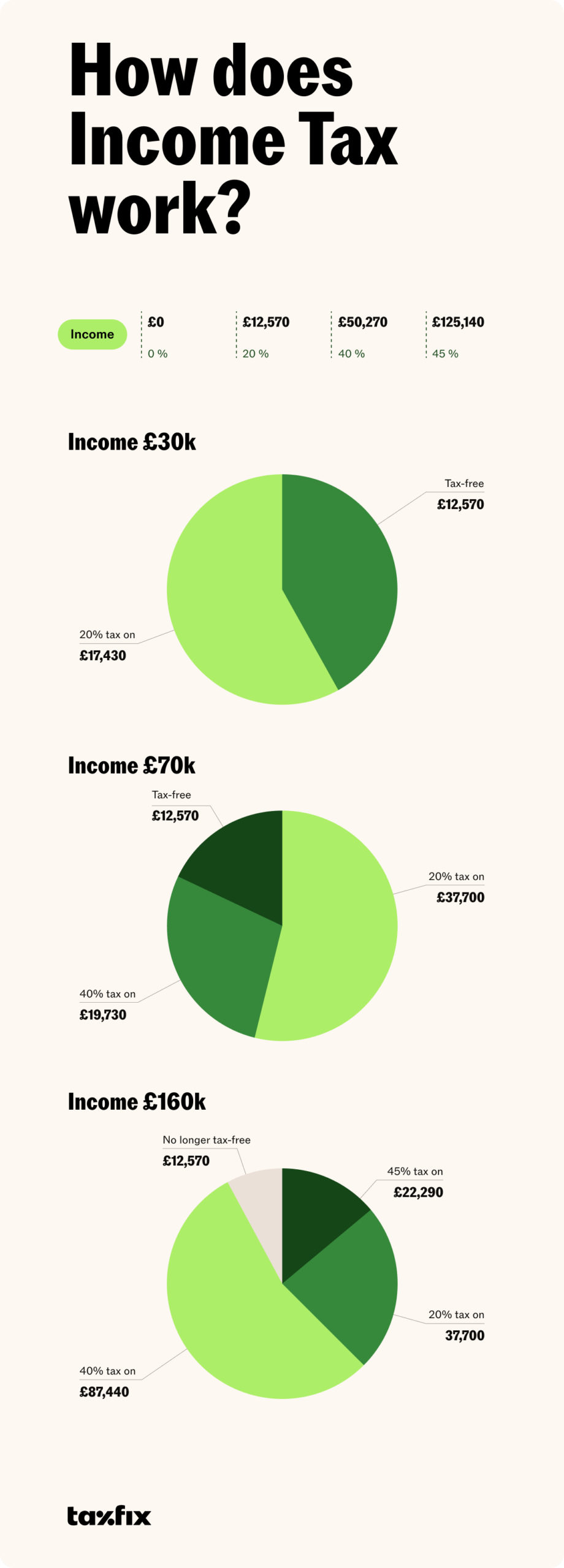
The Income Tax rates for England, Wales and Northern Ireland in 2025/26 and 2026/27 are below. The bands are the same in both years.
The income tax rates in the 2025/26 tax year 👇
| Income | Tax rate | Tax band |
| Up to £12,570 | 0% | Personal allowance |
| £12,571 to £50,270 | 20% | Basic rate |
| £50,271 to £125,140 | 40% | Higher rate |
| over £125,141 | 45% | Additional rate |
Scotland has its own Income Tax rates and bands. Check HMRC’s rates and allowances for the tax year you are filing.
The 60% tax trap
Between £100,000 and £125,140, each £2 of extra income adds £3 to your taxable income, so a higher rate taxpayer pays 60% on it. This isn’t an official tax band.
- I earn £100,000 and get a £1,000 pay rise
- The extra £1,000 is taxed at my normal 40% Higher Rate
- But for every £2 I earn over £100,000, I also lose £1 of my tax-free Personal Allowance
- At this 2:1 rate, I lose £500 of my Personal Allowance
- This now also needs to be taxed at my 40% Higher Rate
- 40% of £500 is an extra £200 tax
- I am now taxed £600 (£400 + £200) on the extra £1,000 I earn
- £600 is 60% of the extra £1000 I ear
For more on the 60% rate, read What is the 60% tax trap?
Do I need to file a Self Assessment if I earn over £100k?
Not automatically. HMRC’s list of who must send a return has no income threshold. You must send one if, for example, you were a sole trader earning over £1,000, had Capital Gains Tax to pay, or had to pay the High Income Child Benefit Charge without paying it through PAYE. You may also need to if you have untaxed income, such as rent, savings interest or dividends. Use HMRC’s checker to be sure.
Why check your tax code: even if you don’t file, your tax code decides how much tax is taken from your pay.
How joint ownership affects your tax return (and your tax bill)
Married couples and civil partners who live together are normally taxed 50:50 on joint savings interest and property income. If your real shares are unequal, you may be able to change the split. For property, use Form 17 with evidence of the unequal shares, such as a declaration or deed. For savings, check HMRC’s current guidance first. Unmarried joint owners of savings are normally taxed on their actual entitlement, which for a bank account is usually split equally.
Example: £2,000 of joint interest, with one partner a basic rate taxpayer and the other a higher rate taxpayer. A 50:50 split gives £200 tax in total. If the basic rate partner really owns 80%, and a valid declaration applies, the total falls to £120, after the Personal Savings Allowance.
- Each partner can have their own ISA: £20,000 each for 2026/27. Joint ISAs aren’t allowed.
Alternatives to the tax implications of earning over £100k
Whatever tax you’re liable to pay, you will have to pay by law. That said, there are ways to be more tax efficient.
- Take non-cash benefits: such as a company car, through salary sacrifice instead of a pay rise. Taxable benefits can still count towards your adjusted net income.
- Pension contributions: these reduce your adjusted net income and can restore some or all of your Personal Allowance. For example, a £110,000 earner who pays £10,000 into a pension has adjusted net income of £100,000, and Income Tax for 2026/27 is £6,000 lower.
- Gift Aid: for every £1 you give, your adjusted net income falls by £1.25.
- ISAs: move investments into an ISA to shelter dividends, interest and gains from tax.
- Look for tax-efficient investments.
What to prepare for your Self Assessment return
- Employment income: P60 (end-of-year summary) and P11D (benefits in kind, such as a company car or private health insurance).
- Savings interest: statements from all accounts, even if the interest is within your Personal Savings Allowance.
- Dividends: dividends above your £500 dividend allowance are taxed at 8.75%, 33.75% or 39.35% for 2025/26, depending on your tax band. From 6 April 2026, the basic and higher rates rise to 10.75% and 35.75%.
- Capital gains: records of disposals (shares, property, crypto, etc.), including purchase price, sale price and allowable costs.
- Pension contributions: the contributions you paid yourself in the tax year, and any tax relief your provider has already claimed.
- Gift Aid donations: receipts or statements from charities.
- Joint ownership details:
Taxfix connects you with UK-qualified tax accountants and digital tools to help you file your return. Gather the documents above first, then start with Taxfix.
FAQ: 100k after tax UK
How much is £100k after tax in the UK?
It depends on your pension, Gift Aid and benefits. As an illustration, a £100,000 salary with no other adjustments pays £27,432 Income Tax in 2025/26 in England, Wales or Northern Ireland, leaving £72,568 before National Insurance and any student loan repayments.
What is the 100k tax trap?
It is the loss of your Personal Allowance between £100,000 and £125,140. It is not an official tax band.
Do I need to file a Self Assessment if I earn over £100k?
Not automatically. See the section above.
How can I reduce the impact of losing my Personal Allowance?
Pension contributions and Gift Aid can lower your adjusted net income, which can restore some or all of your Personal Allowance.
What is Adjusted Net Income?
Your total taxable income after certain reliefs, such as pension contributions paid gross and Gift Aid. HMRC uses it to work out your Personal Allowance and the High Income Child Benefit Charge, which starts at £60,000.
How does joint ownership affect my tax return?
Married couples and civil partners who live together are normally taxed 50:50 on joint income. See the section above.
Can Taxfix help me if I earn over £100k?
Taxfix connects you with UK-qualified tax accountants and digital tools. It can’t guarantee a refund or a specific outcome.
This article provides general information only and is not personalised tax advice.
Filing your Self Assessment tax return: Taxfix vs HMRC
Filing with Taxfix is just easier. Not only that, but we’re friendlier, jargon-free and have expert accountants on our side.
- An intuitive and well-loved platform
- We can file your tax return quickly
- Your accredited accountant does it all for you

Looking for tax help?
Or see our Guides, Calculators or Taxopedia